

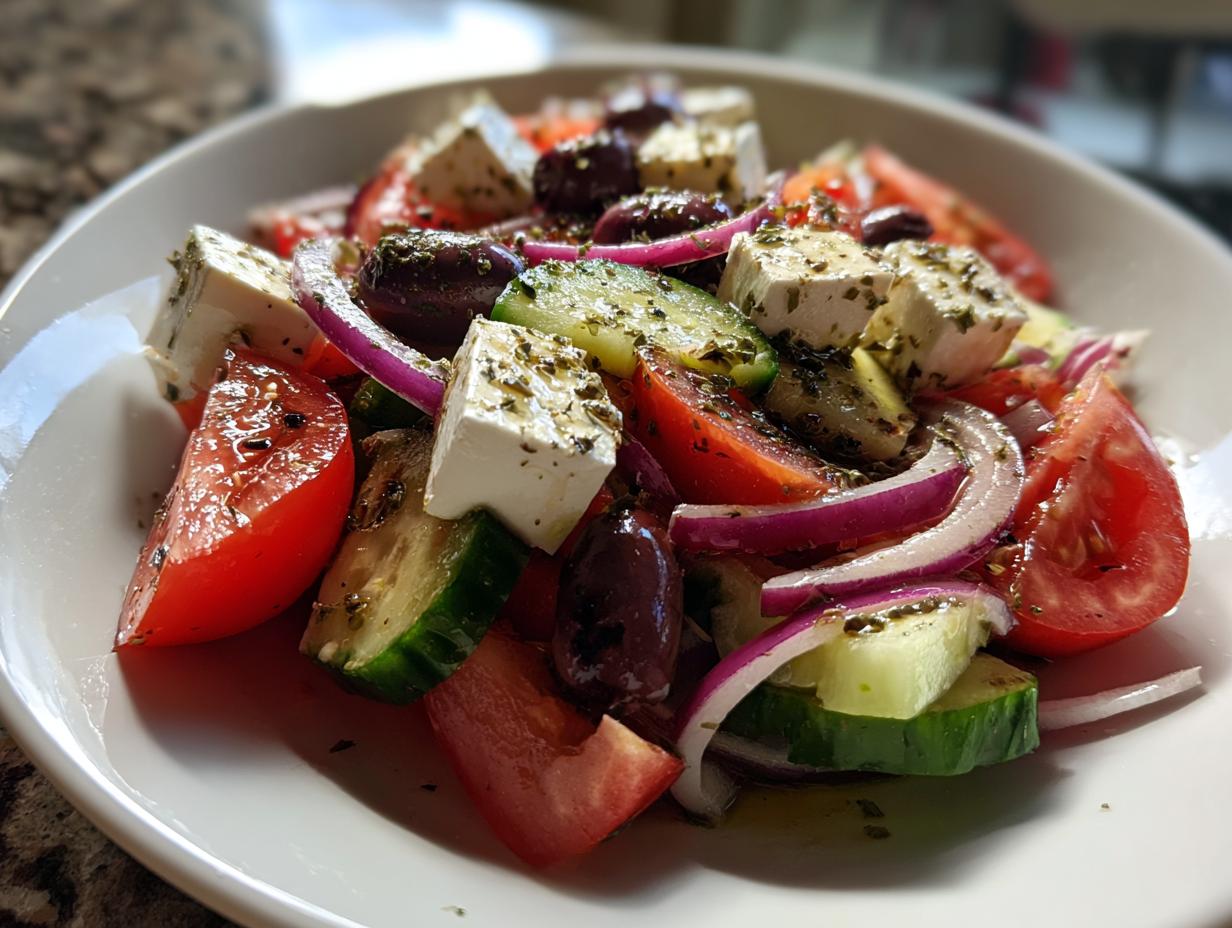
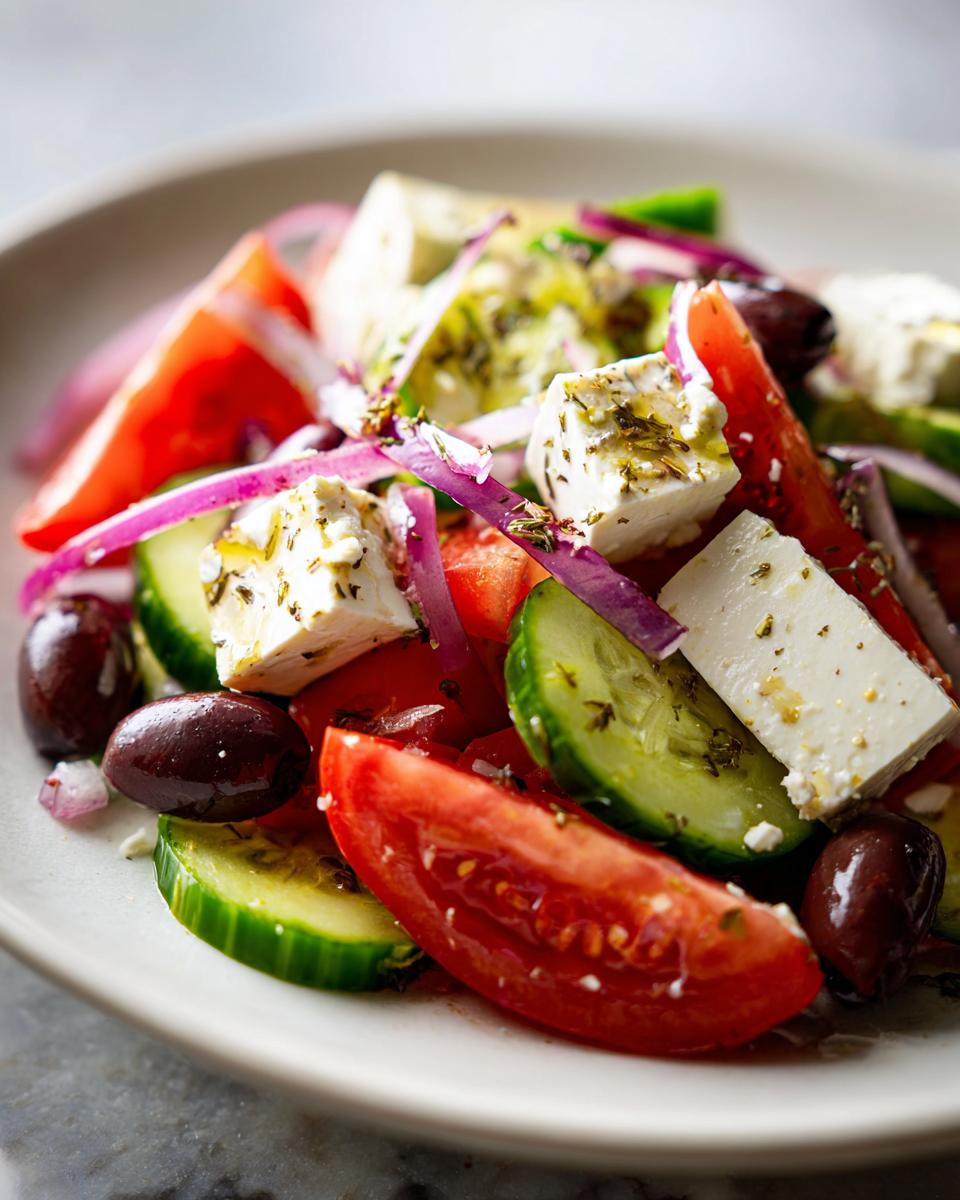
There’s just something about that bright, sun-drenched flavor of the Mediterranean, isn’t there? When life gets hectic—and trust me, it always does—I retreat to the recipes that require zero fuss but pack a giant flavor punch. That’s where this truly Authentic Greek Salad comes in. Forget those sad, limp salads drowning in lettuce; the real deal, the Horiatiki, is all about the vegetables, the olives, and that glorious block of salty feta.
This is my go-to Greek Salad when I need a quick side dish that feels incredibly special. We’re talking assembly only, folks. You do not need to cook anything, and I promise you’ll have this incredible, vibrant salad ready to eat in under 15 minutes. That’s the sweet spot I always aim for here at the Diary—real food, real quick, that reminds you why you started cooking in the first place.
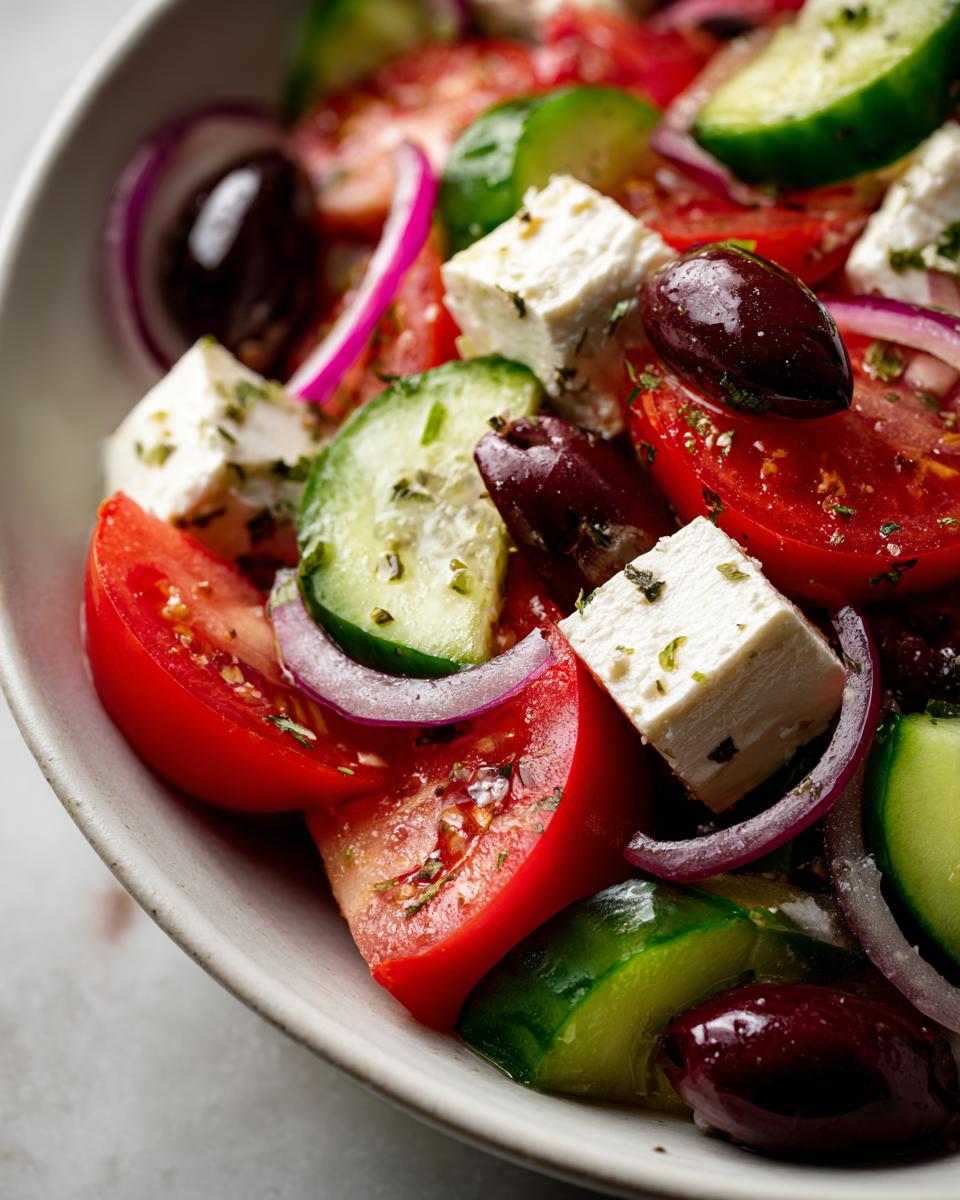
- Why This Authentic Greek Salad Recipe Works for Busy Lives
- Ingredients for Your Crisp Cucumber Tomato Salad
- How to Assemble Your Greek Salad Recipe in 15 Minutes
- Tips for Success Making the Perfect Greek Salad
- Variations: Adding Avocado to Your Mediterranean Salad
- Serving Suggestions for This Quick Side Dish
- Storage and Reheating Instructions for Leftover Greek Salad
- Frequently Asked Questions About the Horiatiki Salad
- Estimated Nutritional Information for this Mediterranean Diet Meal
- Share Your Experience with This Easy Salad Recipe
- Serving Suggestions for This Quick Side Dish
- Storage and Reheating Instructions for Leftover Greek Salad
- Frequently Asked Questions About the Horiatiki Salad
- Estimated Nutritional Information for this Mediterranean Diet Meal
- Share Your Experience with This Easy Salad Recipe
- Serving Suggestions for This Quick Side Dish
- Storage and Reheating Instructions for Leftover Greek Salad
- Frequently Asked Questions About the Horiatiki Salad
- Estimated Nutritional Information for this Mediterranean Diet Meal
- Share Your Experience with This Easy Salad Recipe
Why This Authentic Greek Salad Recipe Works for Busy Lives
Listen, I get it. Sometimes dinner feels like a race against the clock. That’s why this Greek Salad recipe is a consistent champion in my rotation. It’s all about maximizing freshness while minimizing effort. When I first started documenting these recipes, I knew I needed dishes that adapted to my crazy schedule, and this one fits the bill perfectly.
Honestly, if I can pull this off after a long day, anyone can. Here’s why this recipe keeps making it onto our table:
- Prep Time is Lightning Fast: We’re talking 15 minutes total. If you can chop a cucumber and open a jar of olives, you’re basically done!
- True Authenticity: This is a classic Horiatiki style—absolutely no lettuce here. It keeps things crisp and focused on the good stuff.
- Mediterranean Diet Friendly: It’s packed with fresh olive oil, crisp veggies, and quality cheese. It holds up beautifully as a healthy salad idea.
- Naturally Low Carb Salad: If you’re watching carbs, this is your dream side dish, as it’s loaded with fiber and healthy fats.
For another quick, healthy fix that skips the greens, check out my healthy tuna salad using Greek yogurt. But for now, let’s focus on these vibrant vegetables!
Ingredients for Your Crisp Cucumber Tomato Salad
When you are making an Authentic Greek Salad, the quality of your ingredients shouts louder than any complex technique. Seriously, this whole dish lives or dies by how good your tomatoes taste and how beautifully flaky your feta is. I don’t mess around here; we need good stuff!
I’ve laid out exactly what you need below. Notice I specifically ask for a *block* of feta. Please don’t grab that sad little container of pre-crumbled stuff; it just dissolves into mush when you add the dressing. We want big, beautiful cubes of salty, creamy goodness in every bite!
Essential Produce and Feta Cheese Salad Components
These are the stars of the show. Remember, rustic cuts are authentic! Don’t worry about chopping perfectly; you want big, satisfying chunks.
- 2 large ripe tomatoes, cut into wedges (The riper, the better, seriously!)
- 1 large cucumber, peeled, seeded, and sliced thickly
- 1/2 red onion, thinly sliced
- 1 cup Kalamata olives, pitted or unpitted (I leave them unpitted when I have time—it keeps that brine locked in! Check out more ideas for Kalamata olives recipes if you have extra.)
- 8 ounces block feta cheese, cut into large cubes
Components for the Best Greek Salad Vinaigrette
This dressing is liquid gold. It’s simple, bright, and what pulls the whole Feta Cheese Salad together. Don’t even think about reaching for that bottled stuff; this Homemade Greek Dressing takes 30 seconds.
- 1/4 cup extra virgin olive oil (Use the *good* stuff here; this is the base!)
- 2 tablespoons red wine vinegar
- 1 teaspoon dried oregano
- 1/2 teaspoon salt
- 1/4 teaspoon black pepper
That’s it! A perfect foundation for your new favorite Mediterranean Salad.
How to Assemble Your Greek Salad Recipe in 15 Minutes
Okay, ready to bring it all together? This is where the magic happens, and I guarantee we’re keeping that promise: this whole Greek Salad Recipe comes together in 15 minutes flat. Since we aren’t using lettuce, assembly is super fast, but timing is everything so those vegetables stay crisp throughout the process. You’ll want to have all your chopping done before you even think about mixing up that dressing. If you’re looking for similarly fast, rewarding meals, always check out my tips for quick weeknight dinners!
Preparing the Fresh Vegetable Salad Base
Remember what I said about rustic cuts? That’s how you keep the integrity of the vegetables. We want texture you can sink your teeth into. For this No Lettuce Salad, grab your largest mixing bowl—you need room to work without just smashing everything around.
First, get those tomatoes cut into decent wedges. Don’t dice them tiny; they need to hold their shape! Next, peel the cucumber, scoop out those watery seeds if you want, and slice it thickly—about a half-inch thick is perfect. The red onion just needs a thin slice so it integrates nicely without being too aggressive. Toss all those lovely fresh elements into the bowl along with your Kalamata olives. That’s the vegetable base done, and honestly, that takes up most of the 15 minutes!
Creating the Greek Dressing Homemade
While your veggies are chilling (maybe?), it’s time for our famous dressing. This is the heart of the flavor profile, so make sure you grab that dried oregano. If you use fresh, it won’t have the same punchiness in a simple vinaigrette like this.
Grab a small bowl—no need to dirty a jar unless you’re saving some for later. Pour in your quality olive oil and the red wine vinegar. Now, whisk like you mean it! You aren’t trying to fully emulsify it like mayonnaise, but you want that initial binding so the oil and vinegar aren’t totally separated pools. Whisk in the salt, black pepper, and that tablespoon of oregano. Give it a quick taste—needs more zing? Add a tiny dash more vinegar. That’s how you make a Greek Dressing Homemade that tastes way better than store-bought!
Final Assembly and Serving the Authentic Greek Salad
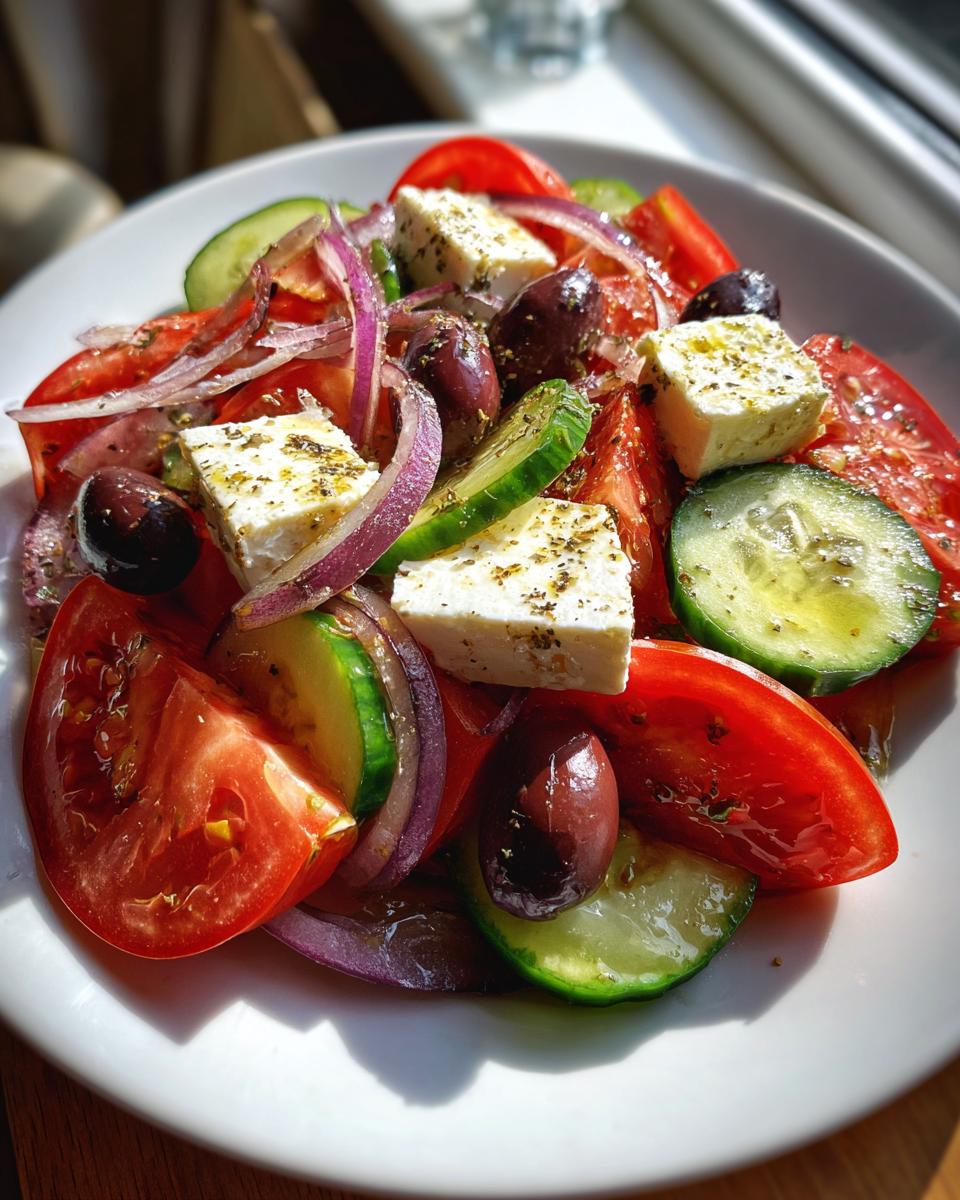
This is the most crucial part for texture! We add the feta last. If you mix the heavy cubes of feta in too early or toss too vigorously, you end up with salty crumbles floating everywhere instead of distinct, creamy bites. We want that look of quality in an Authentic Greek Salad.
Gently add your big cubes of feta on top of the vegetables. Now, pour that beautiful dressing evenly over everything. Your job now is minimal: gently use two large spoons or tongs to lift and turn the salad just enough so everything gets a light coating. Don’t stir! Lift and fold. We need to serve this immediately, straight from the bowl, to enjoy that peak crunch. If you’re prepping for a light dinner ahead of time, just keep the dressing separate. Trust me on this one; it’s worth the extra 30 seconds of final pairing.
Tips for Success Making the Perfect Greek Salad
Look, once you have the basic assembly down for this Greek Salad Recipe, success is almost guaranteed. But I learned a few little whispers along the way—things that elevate it from good to that *wow, where did you get this* level. These tips come straight from honestly wasting a few inferior salads early in my cooking journey, so you don’t have to!
The biggest mistake I see people make is treating these ingredients like they are destined for a finely chopped salsa. That’s just not how you honor the rustic nature of a Horiatiki!
- Keep it Big and Rustic: I hammered this point home earlier, but I’m saying it again! When you chop your tomatoes into wedges and slice your cucumber thick—maybe half an inch—you preserve their texture. Little pieces turn mushy fast once the dressing hits them. We want crispness!
- The Feta Rule: Always use a good block of feta packed in brine, if possible, and cut it into very generous 1-inch cubes. Don’t dice it small. The visual impact of those big white chunks against the red tomato is half the battle!
- The Oregano Must Be Dried: Fresh herbs are lovely, but for the intensity of flavor required in this simple vinaigrette, dried oregano is absolutely the way to go for that authentic, savory backbone.
Now, if you happen to crave a slightly different texture in your dressing, I have a little secret that sometimes creeps into my rotation when I’m craving something richer, almost like a thin Caesar. If you want to try it, whisk in just one teaspoon of Dijon mustard when you mix your vinegar and oil for the dressing. It gives a very subtle creaminess without turning it into a heavy emulsion. If you’re interested in other creamy dressing science, you should look at my post on the Caesar salad dressing—it breaks down how emulsification works!
But generally, for the pure, bright flavor of this Mediterranean Salad, stick to the simple oil and vinegar base. It lets those amazing fresh vegetables shine!
Variations: Adding Avocado to Your Mediterranean Salad
Okay, so while purists will fight me on this—and I totally respect the classic Horiatiki tradition—sometimes you just need a bit more creaminess and healthy fat in your life, right? That’s where avocado sneaks into the party. Adding avocado doesn’t make it less of a Mediterranean Salad; it just turns it into a heartier meal that keeps you satisfied longer. It’s a fantastic addition if you’re eating this salad as a light dinner idea instead of just a side.
If you’re going to add avocado, treat it just like the tomatoes and cucumbers. You want good, ripe pieces, diced into chunks roughly the same size as your feta cubes. Toss those avocado bits in with the tomatoes, cucumbers, and onions at the very beginning. It handles the dressing just fine, provided you follow one easy rule I learned the hard way!
The trick when using avocado in any big salad like this is timing, especially when dealing with acidic dressing. Acidity helps stop browning, but too much sitting time will still invite trouble. You should absolutely assemble the vegetables and the avocado first, but only drizzle that Greek Dressing Homemade on right before you serve it. If you dress it an hour ahead, that avocado might start turning a little sad.
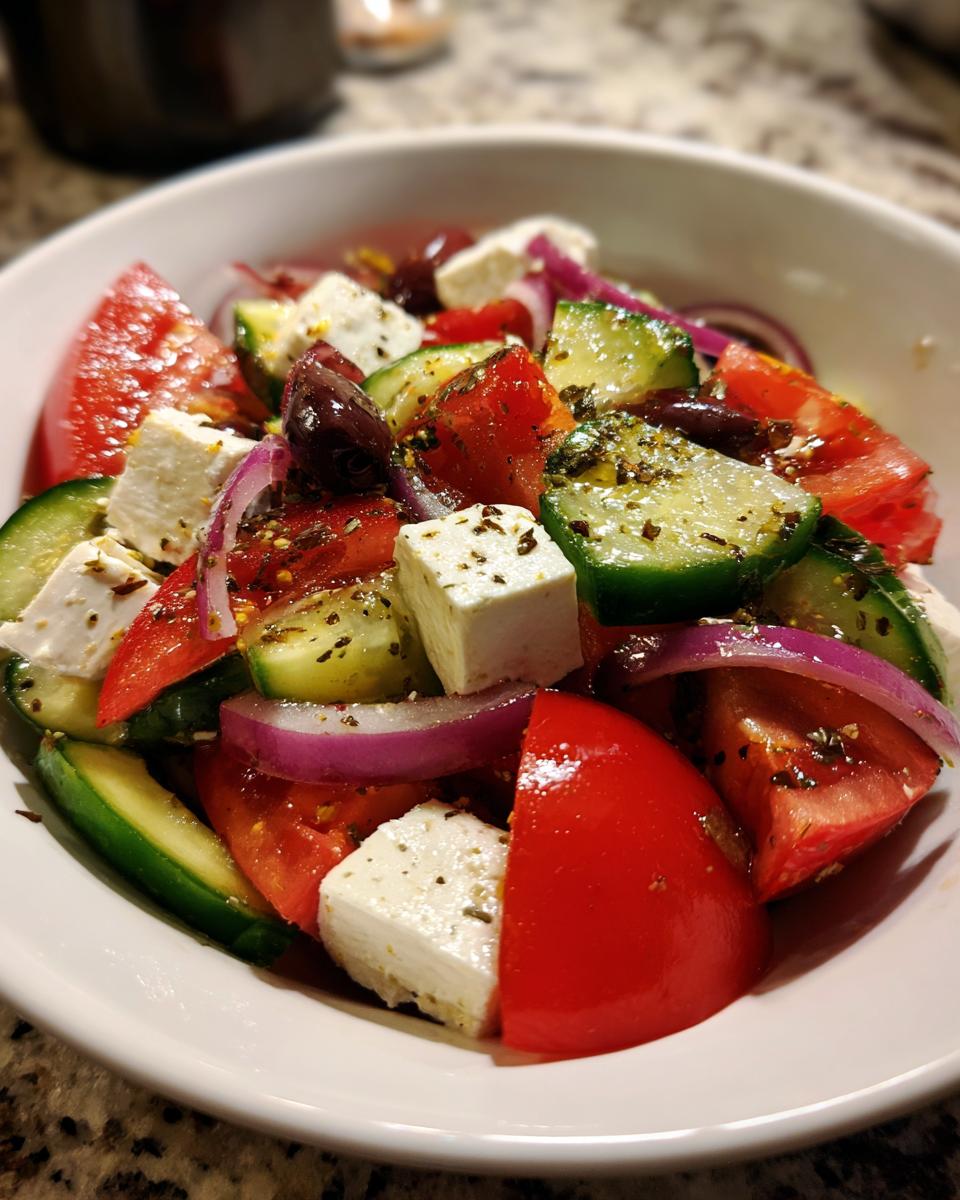
It really does transform the texture! If you want to see another great use for avocado and chicken, check out the recipe I shared for avocado chicken salad. But for this version, give this creamy addition a shot; lots of people love the hybrid flavor profiles, and you can even check out a specific version someone else put together over at Greek Salad with Avocado. It’s a perfectly acceptable, modern twist!
Serving Suggestions for This Quick Side Dish
This Greek Salad is wonderfully versatile, which is why it makes such a fantastic staple in my kitchen diary. Sure, it’s a brilliant low carb salad option for a light lunch on its own, but it truly shines when brought to a gathering or paired with some simple mains.
If you’re planning a summer cookout or a relaxed weekend dinner, this is the perfect addition. It cuts right through the richness of grilled meats. Think of it as the ultimate Salad for BBQ—it’s refreshing and sturdy enough to hold its own next to burgers or sausages.
Here are my favorite ways to serve this Crisp Cucumber Tomato Salad:
- With Grilled Poultry or Fish: Simply toss this salad with some grilled chicken breast or flaky white fish. It’s an instant, healthy, light dinner that tastes like vacation. If you want a great main element to go with it, you have to try my foolproof air fryer pork chops recipe; the salty feta balances the savory pork so nicely.
- As an Appetizer or First Course: Serve it slightly chilled alongside some warm pita bread or hummus for a simple starter at any weekend get-together.
- Summer Parties: Because it comes together so fast, it’s always my go-to when company shows up unexpectedly. It looks beautiful and tastes infinitely fresher than anything pre-made.
Keep it simple, keep it fresh, and let that high-quality olive oil and tangy vinegar do all the heavy lifting!
Storage and Reheating Instructions for Leftover Greek Salad
Now, I’m going to be completely honest with you here, which is what this whole Diary is about. This Greek Salad Recipe—the real, authentic kind—is not a big fan of leftovers. It’s designed to be made and eaten almost immediately. Why? Because tomatoes, bless their juicy hearts, are mostly water, and once they mingle with the salt in the feta and the acid in the vinegar, they start releasing a lot of that liquid.
If you manage to have some leftover, you need to approach storage like a surgeon. If you try to save the whole dressed salad, you’re going to end up with a watery soup with sad, soggy cucumber slices clinging to the bottom of the container. Not pretty, not tasty.
Here is the only way I ever manage to save components for my Meal Prep Salads featuring these flavors. If you know you won’t finish it immediately, you need to separate the components like you’re hiding evidence!
For great tips on planning meals ahead, always check out my guide on planning salads for meal prep, but the rules change slightly for fresh vegetable salads like this one.
- Key Rule: Do Not Dress It! If you think you’ll have leftovers, only dress the portion you are going to eat right away. Store all your chopped vegetables, olives, and that beautiful block of feta completely naked in airtight containers in the fridge.
- Dressing on the Side: Take your gorgeous Homemade Greek Dressing and store it separately in a small jar. The olive oil might solidify a bit in the fridge; just let it sit on the counter for 20 minutes before you plan to use it to shake it back into liquid form.
- The Tomato Situation: Even undressed, tomatoes don’t keep their amazing snap for long. After about 12 hours, those wedge cuts will start to get a little softer. They are still edible, of course, but they won’t have that satisfying first-bite crunch.
Can you reheat this Mediterranean Salad? Absolutely not! This is a cold salad, meant to be eaten fresh, crisp, and cool. If you have leftovers, I highly recommend taking the leftover undressed veggies, maybe adding a fresh cucumber or tomato to bulk it up, and dressing *that* small batch fresh. That’s the real secret to enjoying this dish over two days!
Frequently Asked Questions About the Horiatiki Salad
I know you might have a few lingering thoughts, especially if this is your first dive into making a truly Authentic Greek Salad. That’s totally normal! When I started documenting these recipes, I had a million questions myself, usually centering around substitutions or traditions. Here are the big ones that pop up most often about assembling this amazing Horiatiki Salad.
Does authentic Greek Salad have lettuce?
This is the most common question, and the answer is a firm, loving “No!” Traditional Greek salad, or Horiatiki (which means ‘village’ salad), focuses entirely on the tomato, cucumber, onion, olives, and feta. Adding lettuce turns it into more of a generic ‘Mediterranean Salad’ found in American delis. While I love me a good leafy salad sometimes, if you are aiming for that authentic summer flavor, leave the greens out. This keeps it a fantastic No Lettuce Salad, which is inherently better for low-carb diets, too.
Can I make the dressing ahead of time?
Oh, absolutely! I actually highly recommend it, especially if you are planning on serving this as an appetizer or a quick side dish for a gathering. The flavors in the Best Greek Salad Vinaigrette only get better after chilling for a few hours. That dried oregano really has time to infuse the oil and vinegar. Just make sure your dressing is sealed tight in the fridge. When you’re ready to eat, pull it out about 20 minutes before assembly so the olive oil loosens up a bit. Remember, don’t dress the actual salad until just before serving, though!
What is the best type of feta for this salad?
If you take away only one piece of advice from this whole process, please let it be this: You need block feta cheese! True, authentic feta is typically made from sheep’s milk (sometimes blended with goat’s milk), and it comes packed in a salty brine. That brine keeps the cheese moist and tangy. The pre-crumbled stuff is usually firmer and coated in anti-caking agents, which makes it dry and crumbly right away when you try to toss it with the veggies. Get the block, cut big, rustic cubes, and thank me later. This elevates your Feta Cheese Salad instantly.
Is this a Low Carb Salad?
Yes, this recipe is inherently fantastic as a Low Carb Salad base! Since we aren’t adding any croutons, pasta, or starchy fillers, you are primarily consuming healthy fats from the oil and cheese, plus fiber and water from the vegetables. It fits perfectly into most Mediterranean Diet Meals. If you want to dive deeper into other salads that fit this low-carb profile, I have a whole guide on low carb salad recipes you can check out later!
For more thoughts on simplifying your Mediterranean cooking, I recently saw a great recipe for an easy version that might inspire you over at Simple Dish Magic. They focus a lot on easy weeknight ideas, just like we do here!
Estimated Nutritional Information for this Mediterranean Diet Meal
When we talk about making a full comeback to honest home cooking, we also need to be smart about what we’re eating. This Greek Salad is one of the best things you can make for your health, fitting right into those easy Mediterranean Diet Meals we all strive for. It’s simple, yes, but it’s packed with flavor and good fats!
I pulled together the numbers below based on the ingredients listed for four generous servings. Keep in mind this is just an estimate—if you use a super pungent, high-quality olive oil, your fat numbers will skew slightly higher, but hey, that’s the good kind of fat, right?
- Serving Size: 1 serving
- Calories: 310
- Fat: 28g (That’s mostly the olive oil and feta—the good stuff!)
- Saturated Fat: 10g
- Carbohydrates: 10g
- Fiber: 3g (Hello, freshness!)
- Protein: 11g
- Sodium: 650mg (Feta and olives bring the salt, so be mindful if you’re watching sodium intake.)
- Sugar: 6g (This is all natural sugar from the tomatoes and onions, which is great!)
See? It’s a fantastic, balanced dish that proves you don’t need heavy starches to feel satisfied!
Share Your Experience with This Easy Salad Recipe
That’s it, my friends! We’ve gone from a handful of fresh vegetables to a beautiful, authentic Greek Salad ready to grace your dinner table. This 15-minute process is one of my proudest recipes because it delivers so much flavor for so little time investment. It’s proof that your home kitchen can always serve up something special.
Now, it’s your turn to bring this recipe diary entry to life in your own kitchen! I absolutely love hearing how you put your own spin on things, or even if you stuck strictly to the traditional Horiatiki style. Please drop a rating below—five stars if this recipe saved your dinner plans this week! And if you tried that avocado variation, let me know how it went.
Don’t be a stranger; I love connecting with everyone who stops by. If you have any burning questions about substitutions or techniques, you can always reach out directly through my contact page. Happy chopping, and I’ll see you soon with another simple, joyful recipe!
Serving Suggestions for This Quick Side Dish
This Greek Salad is wonderfully versatile, which is why it makes such a fantastic staple in my kitchen diary. Sure, it’s a brilliant low carb salad option for a light lunch on its own, but it truly shines when brought to a gathering or paired with some simple mains.
If you’re planning a summer cookout or a relaxed weekend dinner, this is the perfect addition. It cuts right through the richness of grilled meats. Think of it as the ultimate Salad for BBQ—it’s refreshing and sturdy enough to hold its own next to burgers or sausages.
Here are my favorite ways to serve this Crisp Cucumber Tomato Salad:
- With Grilled Poultry or Fish: Simply toss this salad with some grilled chicken breast or flaky white fish. It’s an instant, healthy, light dinner that tastes like vacation. If you want a great main element to go with it, you have to try my foolproof air fryer pork chops recipe; the salty feta balances the savory pork so nicely.
- As an Appetizer or First Course: Serve it slightly chilled alongside some warm pita bread or hummus for a simple starter at any weekend get-together.
- Summer Parties: Because it comes together so fast, it’s always my go-to when company shows up unexpectedly. It looks beautiful and tastes infinitely fresher than anything pre-made.
Keep it simple, keep it fresh, and let that high-quality olive oil and tangy vinegar do all the heavy lifting!
Storage and Reheating Instructions for Leftover Greek Salad
Now, I’m going to be completely honest with you here, which is what this whole Diary is about. This Greek Salad Recipe—the real, authentic kind—is not a big fan of leftovers. It’s designed to be made and eaten almost immediately. Why? Because tomatoes, bless their juicy hearts, are mostly water, and once they mingle with the salt in the feta and the acid in the vinegar, they start releasing a lot of that liquid.
If you manage to have some leftover, you need to approach storage like a surgeon. If you try to save the whole dressed salad, you’re going to end up with a watery soup with sad, soggy cucumber slices clinging to the bottom of the container. Not pretty, not tasty.
Here is the only way I ever manage to save components for my Meal Prep Salads featuring these flavors. If you know you won’t finish it immediately, you need to separate the components like you’re hiding evidence!
For great tips on planning meals ahead, always check out my guide on planning salads for meal prep, but the rules change slightly for fresh vegetable salads like this one.
- Key Rule: Do Not Dress It! If you think you’ll have leftovers, only dress the portion you are going to eat right away. Store all your chopped vegetables, olives, and that beautiful block of feta completely naked in airtight containers in the fridge.
- Dressing on the Side: Take your gorgeous Homemade Greek Dressing and store it separately in a small jar. The olive oil might solidify a bit in the fridge; just let it sit on the counter for 20 minutes before you plan to use it to shake it back into liquid form.
- The Tomato Situation: Even undressed, tomatoes don’t keep their amazing snap for long. After about 12 hours, those wedge cuts will start to get a little softer. They are still edible, of course, but they won’t have that satisfying first-bite crunch.
Can you reheat this Mediterranean Salad? Absolutely not! This is a cold salad, meant to be eaten fresh, crisp, and cool. If you have leftovers, I highly recommend taking the leftover undressed veggies, maybe adding a fresh cucumber or tomato to bulk it up, and dressing *that* small batch fresh. That’s the real secret to enjoying this dish over two days!
Frequently Asked Questions About the Horiatiki Salad
I know you might have a few lingering thoughts, especially if this is your first dive into making a truly Authentic Greek Salad. That’s totally normal! When I started documenting these recipes, I had a million questions myself, usually centering around substitutions or traditions. Here are the big ones that pop up most often about assembling this amazing Horiatiki Salad.
Does authentic Greek Salad have lettuce?
This is the most common question, and the answer is a firm, loving “No!” Traditional Greek salad, or Horiatiki (which means ‘village’ salad), focuses entirely on the tomato, cucumber, onion, olives, and feta. Adding lettuce turns it into more of a generic ‘Mediterranean Salad’ found in American delis. While I love me a good leafy salad sometimes, if you are aiming for that authentic summer flavor, leave the greens out. This keeps it a fantastic No Lettuce Salad, which is inherently better for low-carb diets, too.
Can I make the dressing ahead of time?
Oh, absolutely! I actually highly recommend it, especially if you are planning on serving this as an appetizer or a quick side dish for a gathering. The flavors in the Best Greek Salad Vinaigrette only get better after chilling for a few hours. That dried oregano really has time to infuse the oil and vinegar. Just make sure your dressing is sealed tight in the fridge. When you’re ready to eat, pull it out about 20 minutes before assembly so the olive oil loosens up a bit. Remember, don’t dress the actual salad until just before serving, though!
What is the best type of feta for this salad?
If you take away only one piece of advice from this whole process, please let it be this: You need block feta cheese! True, authentic feta is typically made from sheep’s milk (sometimes blended with goat’s milk), and it comes packed in a salty brine. That brine keeps the cheese moist and tangy. The pre-crumbled stuff is usually firmer and coated in anti-caking agents, which makes it dry and crumbly right away when you try to toss it with the veggies. Get the block, cut big, rustic cubes, and thank me later. This elevates your Feta Cheese Salad instantly.
Is this a Low Carb Salad?
Yes, this recipe is inherently fantastic as a Low Carb Salad base! Since we aren’t adding any croutons, pasta, or starchy fillers, you are primarily consuming healthy fats from the oil and cheese, plus fiber and water from the vegetables. It fits perfectly into most Mediterranean Diet Meals. If you want to dive deeper into other salads that fit this low-carb profile, I have a whole guide on low carb salad recipes you can check out later!
For more thoughts on simplifying your Mediterranean cooking, I recently saw a great recipe for an easy version that might inspire you over at Simple Dish Magic. They focus a lot on easy weeknight ideas, just like we do here!
Estimated Nutritional Information for this Mediterranean Diet Meal
When we talk about making a full comeback to honest home cooking, we also need to be smart about what we’re eating. This Greek Salad is one of the best things you can make for your health, fitting right into those easy Mediterranean Diet Meals we all strive for. It’s simple, yes, but it’s packed with flavor and good fats!
I pulled together the numbers below based on the ingredients listed for four generous servings. Keep in mind this is just an estimate—if you use a super pungent, high-quality olive oil, your fat numbers will skew slightly higher, but hey, that’s the good kind of fat, right?
- Serving Size: 1 serving
- Calories: 310
- Fat: 28g (That’s mostly the olive oil and feta—the good stuff!)
- Saturated Fat: 10g
- Carbohydrates: 10g
- Fiber: 3g (Hello, freshness!)
- Protein: 11g
- Sodium: 650mg (Feta and olives bring the salt, so be mindful if you’re watching sodium intake.)
- Sugar: 6g (This is all natural sugar from the tomatoes and onions, which is great!)
See? It’s a fantastic, balanced dish that proves you don’t need heavy starches to feel satisfied!
Share Your Experience with This Easy Salad Recipe
That’s it, my friends! We’ve gone from a handful of fresh vegetables to a beautiful, authentic Greek Salad ready to grace your dinner table. This 15-minute process is one of my proudest recipes because it delivers so much flavor for so little time investment. It’s proof that your home kitchen can always serve up something special.
Now, it’s your turn to bring this recipe diary entry to life in your own kitchen! I absolutely love hearing how you put your own spin on things, or even if you stuck strictly to the traditional Horiatiki style. Please drop a rating below—five stars if this recipe saved your dinner plans this week! And if you tried that avocado variation, let me know how it went.
Don’t be a stranger; I love connecting with everyone who stops by. If you have any burning questions about substitutions or techniques, you can always reach out directly through my contact page. Happy chopping, and I’ll see you soon with another simple, joyful recipe!
Serving Suggestions for This Quick Side Dish
This Greek Salad is wonderfully versatile, which is why it makes such a fantastic staple in my kitchen diary. Sure, it’s a brilliant low carb salad option for a light lunch on its own, but it truly shines when brought to a gathering or paired with some simple mains.
If you’re planning a summer cookout or a relaxed weekend dinner, this is the perfect addition. It cuts right through the richness of grilled meats. Think of it as the ultimate Salad for BBQ—it’s refreshing and sturdy enough to hold its own next to burgers or sausages.
Here are my favorite ways to serve this Crisp Cucumber Tomato Salad:
- With Grilled Poultry or Fish: Simply toss this salad with some grilled chicken breast or flaky white fish. It’s an instant, healthy, light dinner that tastes like vacation. If you want a great main element to go with it, you have to try my foolproof air fryer pork chops recipe; the salty feta balances the savory pork so nicely.
- As an Appetizer or First Course: Serve it slightly chilled alongside some warm pita bread or hummus for a simple starter at any weekend get-together.
- Summer Parties: Because it comes together so fast, it’s always my go-to when company shows up unexpectedly. It looks beautiful and tastes infinitely fresher than anything pre-made.
Keep it simple, keep it fresh, and let that high-quality olive oil and tangy vinegar do all the heavy lifting!
Storage and Reheating Instructions for Leftover Greek Salad
Now, I’m going to be completely honest with you here, which is what this whole Diary is about. This Greek Salad Recipe—the real, authentic kind—is not a big fan of leftovers. It’s designed to be made and eaten almost immediately. Why? Because tomatoes, bless their juicy hearts, are mostly water, and once they mingle with the salt in the feta and the acid in the vinegar, they start releasing a lot of that liquid.
If you manage to have some leftover, you need to approach storage like a surgeon. If you try to save the whole dressed salad, you’re going to end up with a watery soup with sad, soggy cucumber slices clinging to the bottom of the container. Not pretty, not tasty.
Here is the only way I ever manage to save components for my Meal Prep Salads featuring these flavors. If you know you won’t finish it immediately, you need to separate the components like you’re hiding evidence!
For great tips on planning meals ahead, always check out my guide on planning salads for meal prep, but the rules change slightly for fresh vegetable salads like this one.
- Key Rule: Do Not Dress It! If you think you’ll have leftovers, only dress the portion you are going to eat right away. Store all your chopped vegetables, olives, and that beautiful block of feta completely naked in airtight containers in the fridge.
- Dressing on the Side: Take your gorgeous Homemade Greek Dressing and store it separately in a small jar. The olive oil might solidify a bit in the fridge; just let it sit on the counter for 20 minutes before you plan to use it to shake it back into liquid form.
- The Tomato Situation: Even undressed, tomatoes don’t keep their amazing snap for long. After about 12 hours, those wedge cuts will start to get a little softer. They are still edible, of course, but they won’t have that satisfying first-bite crunch.
Can you reheat this Mediterranean Salad? Absolutely not! This is a cold salad, meant to be eaten fresh, crisp, and cool. If you have leftovers, I highly recommend taking the leftover undressed veggies, maybe adding a fresh cucumber or tomato to bulk it up, and dressing *that* small batch fresh. That’s the real secret to enjoying this dish over two days!
Frequently Asked Questions About the Horiatiki Salad
I know you might have a few lingering thoughts, especially if this is your first dive into making a truly Authentic Greek Salad. That’s totally normal! When I started documenting these recipes, I had a million questions myself, usually centering around substitutions or traditions. Here are the big ones that pop up most often about assembling this amazing Horiatiki Salad.
Does authentic Greek Salad have lettuce?
This is the most common question, and the answer is a firm, loving “No!” Traditional Greek salad, or Horiatiki (which means ‘village’ salad), focuses entirely on the tomato, cucumber, onion, olives, and feta. Adding lettuce turns it into more of a generic ‘Mediterranean Salad’ found in American delis. While I love me a good leafy salad sometimes, if you are aiming for that authentic summer flavor, leave the greens out. This keeps it a fantastic No Lettuce Salad, which is inherently better for low-carb diets, too.
Can I make the dressing ahead of time?
Oh, absolutely! I actually highly recommend it, especially if you are planning on serving this as an appetizer or a quick side dish for a gathering. The flavors in the Best Greek Salad Vinaigrette only get better after chilling for a few hours. That dried oregano really has time to infuse the oil and vinegar. Just make sure your dressing is sealed tight in the fridge. When you’re ready to eat, pull it out about 20 minutes before assembly so the olive oil loosens up a bit. Remember, don’t dress the actual salad until just before serving, though!
What is the best type of feta for this salad?
If you take away only one piece of advice from this whole process, please let it be this: You need block feta cheese! True, authentic feta is typically made from sheep’s milk (sometimes blended with goat’s milk), and it comes packed in a salty brine. That brine keeps the cheese moist and tangy. The pre-crumbled stuff is usually firmer and coated in anti-caking agents, which makes it dry and crumbly right away when you try to toss it with the veggies. Get the block, cut big, rustic cubes, and thank me later. This elevates your Feta Cheese Salad instantly.
Is this a Low Carb Salad?
Yes, this recipe is inherently fantastic as a Low Carb Salad base! Since we aren’t adding any croutons, pasta, or starchy fillers, you are primarily consuming healthy fats from the oil and cheese, plus fiber and water from the vegetables. It fits perfectly into most Mediterranean Diet Meals. If you want to dive deeper into other salads that fit this low-carb profile, I have a whole guide on low carb salad recipes you can check out later!
For more thoughts on simplifying your Mediterranean cooking, I recently saw a great recipe for an easy version that might inspire you over at Simple Dish Magic. They focus a lot on easy weeknight ideas, just like we do here!
Estimated Nutritional Information for this Mediterranean Diet Meal
When we talk about making a full comeback to honest home cooking, we also need to be smart about what we’re eating. This Greek Salad is one of the best things you can make for your health, fitting right into those easy Mediterranean Diet Meals we all strive for. It’s simple, yes, but it’s packed with flavor and good fats!
I pulled together the numbers below based on the ingredients listed for four generous servings. Keep in mind this is just an estimate—if you use a super pungent, high-quality olive oil, your fat numbers will skew slightly higher, but hey, that’s the good kind of fat, right?
- Serving Size: 1 serving
- Calories: 310
- Fat: 28g (That’s mostly the olive oil and feta—the good stuff!)
- Saturated Fat: 10g
- Carbohydrates: 10g
- Fiber: 3g (Hello, freshness!)
- Protein: 11g
- Sodium: 650mg (Feta and olives bring the salt, so be mindful if you’re watching sodium intake.)
- Sugar: 6g (This is all natural sugar from the tomatoes and onions, which is great!)
See? It’s a fantastic, balanced dish that proves you don’t need heavy starches to feel satisfied!
Share Your Experience with This Easy Salad Recipe
That’s it, my friends! We’ve gone from a handful of fresh vegetables to a beautiful, authentic Greek Salad ready to grace your dinner table. This 15-minute process is one of my proudest recipes because it delivers so much flavor for so little time investment. It’s proof that your home kitchen can always serve up something special.
Now, it’s your turn to bring this recipe diary entry to life in your own kitchen! I absolutely love hearing how you put your own spin on things, or even if you stuck strictly to the traditional Horiatiki style. Please drop a rating below—five stars if this recipe saved your dinner plans this week! And if you tried that avocado variation, let me know how it went.
Don’t be a stranger; I love connecting with everyone who stops by. If you have any burning questions about substitutions or techniques, you can always reach out directly through my contact page. Happy chopping, and I’ll see you soon with another simple, joyful recipe!
PrintAuthentic No-Lettuce Greek Salad with Homemade Dressing
Make a fresh, authentic Greek Salad (Horiatiki) in minutes. This recipe skips lettuce and focuses on crisp vegetables, quality feta, and a bright homemade Greek vinaigrette for a perfect Mediterranean side dish or light meal.
- Prep Time: 15 min
- Cook Time: 0 min
- Total Time: 15 min
- Yield: 4 servings 1x
- Category: Salad
- Method: Assembly
- Cuisine: Greek
- Diet: Low Fat
Ingredients
- 2 large ripe tomatoes, cut into wedges
- 1 large cucumber, peeled, seeded, and sliced thickly
- 1/2 red onion, thinly sliced
- 1 cup Kalamata olives, pitted or unpitted
- 8 ounces block feta cheese, cut into large cubes
- 1/4 cup extra virgin olive oil
- 2 tablespoons red wine vinegar
- 1 teaspoon dried oregano
- 1/2 teaspoon salt
- 1/4 teaspoon black pepper
Instructions
- Prepare the vegetables: Cut the tomatoes into wedges, slice the cucumber thickly, and thinly slice the red onion. Place all prepared vegetables and the Kalamata olives into a large mixing bowl.
- Make the dressing: In a small bowl, whisk together the extra virgin olive oil, red wine vinegar, dried oregano, salt, and black pepper until combined.
- Assemble the salad: Gently add the feta cheese cubes to the bowl with the vegetables. Do not toss yet.
- Dress the salad: Pour the homemade Greek dressing evenly over the vegetables and feta.
- Serve immediately: Gently toss the salad just before serving to coat the ingredients without breaking up the feta. This salad is best served right away.
Notes
- For an authentic Horiatiki, avoid chopping the vegetables too small; large, rustic cuts are traditional.
- If you prefer a creamier dressing, you can whisk in 1 teaspoon of Dijon mustard with the vinegar and oil.
- This salad pairs well with grilled chicken or fish for a complete Mediterranean Diet meal.
Nutrition
- Serving Size: 1 serving
- Calories: 310
- Sugar: 6
- Sodium: 650
- Fat: 28
- Saturated Fat: 10
- Unsaturated Fat: 18
- Trans Fat: 0
- Carbohydrates: 10
- Fiber: 3
- Protein: 11
- Cholesterol: 40