

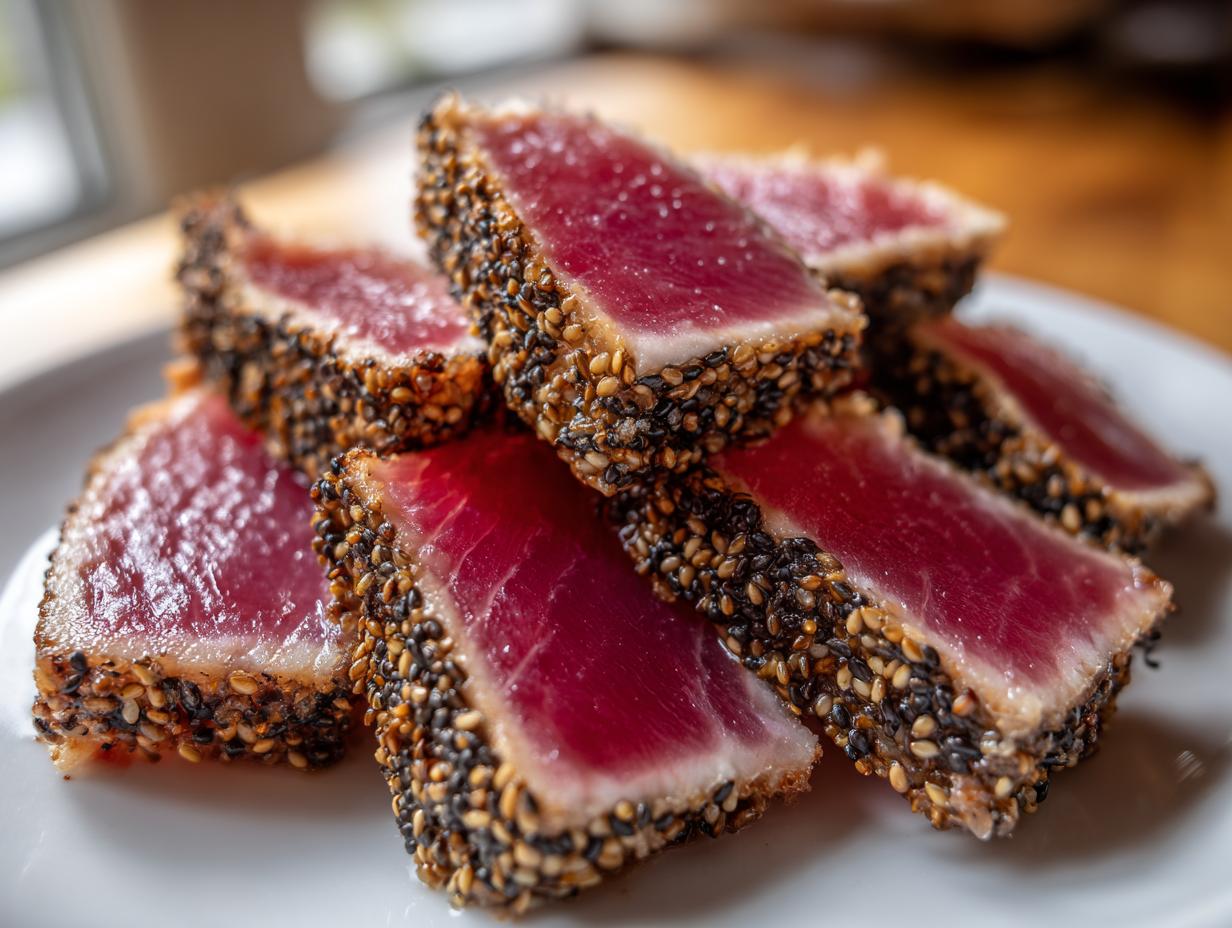
I know what it’s like when life gets busy. Suddenly, the joy of cooking gets packed away with the holiday casseroles, and takeout menus take over. But here at the Diary, we’re fighting back against that silence! We believe a fantastic meal shouldn’t require hours of effort or a reservation—it just needs passion and the right approach. That’s why I’m so excited to share my absolute favorite way to make unbelievably delicious Seared Ahi Tuna. Seriously, this is gourmet food ready faster than most delivery apps can even confirm your order. It’s proof that we can bring those simple, powerful connections back to our tables, even on a Tuesday night. If you want to know more about why we focus on practical, real-life cooking, check out my story behind Little Kitchen Diary.
- Why This Seared Ahi Tuna Recipe Belongs in Your Kitchen Diary
- Ingredients for Perfect Seared Ahi Tuna
- Step-by-Step Instructions for Seared Ahi Tuna
- Tips for Success When Making Seared Ahi Tuna
- Variations on Your Asian Tuna Recipe
- Serving Suggestions for Gourmet Tuna
- Storage and Reheating Instructions for Seared Ahi Tuna
- Frequently Asked Questions About Yellowfin Tuna
- Understanding the Nutrition in Your Quick Seafood Recipe
Why This Seared Ahi Tuna Recipe Belongs in Your Kitchen Diary
When I first started this diary, I needed recipes that delivered a big ‘wow’ factor without demanding all evening. This Seared Ahi Tuna is exactly that. It feels truly gourmet, but honestly, you can get it plated up in about 18 minutes total. That’s why it’s a staple for me when I need a satisfying healthy dinner fast. It proves you don’t need endless time to eat well.
Speed and Simplicity of Seared Ahi Tuna
We’re talking under five minutes of actual cooking time here. That’s the beauty of a high-quality quick seafood recipe. The prep is simple whisking and pressing seeds. You aren’t standing over a stove forever; you sear it hot and fast, and you’re done. It’s efficiency that tastes incredible.
Achieving the Perfect Rare Center
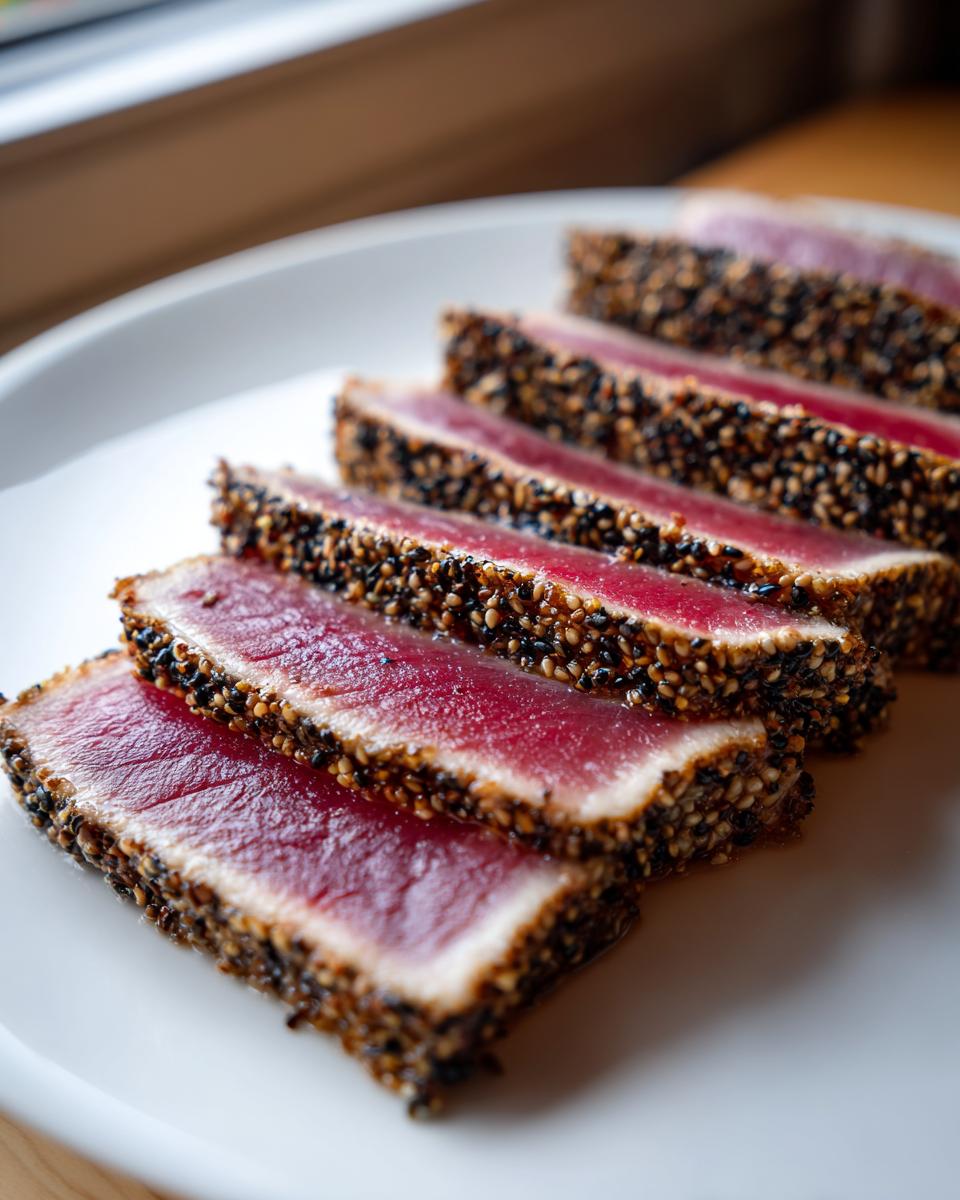
The searing technique is what separates this from any other fish you might cook. When that skillet is screaming hot, you get this incredible, flavorful crust hugging the outside, locking in all that beautiful savory marinade. But the inside? It stays cool, buttery, and barely cooked—that perfect, melt-in-your-mouth rare center. It’s a texture you just can’t replicate any other way, trust me.
Ingredients for Perfect Seared Ahi Tuna
Okay, let’s talk ingredients. For this recipe—and I can’t stress this enough—the quality of your fish is 90% of the battle. You just won’t get that beautiful Seared Ahi Tuna result if the tuna isn’t top-notch. Everything else is simple stuff you probably already have in your pantry. We need two perfect six-ounce steaks, some oil, soy sauce, fresh ginger, garlic, and our fabulous seed crust mixture.
Sourcing High-Quality Sushi Grade Tuna
When you’re shopping, don’t just grab any tuna. You absolutely must look for something labeled as *sushi grade* or high-quality yellowfin tuna. I look for a deep, rich red color—if it looks dull or brownish, put it back. It should feel firm to the touch, almost bouncy, not mushy at all. Because we are only cooking the outside, that inner temperature is everything, so starting with the best quality sushi grade tuna you can find makes all the difference in flavor and safety. This is one place we don’t cut corners!
Step-by-Step Instructions for Seared Ahi Tuna
Alright, let’s get cooking! I’ve timed this out many times, and the key to success here is preparation and speed. You’re going to move quickly once the heat is on. Don’t try to do all these steps at the last minute; have your marinade ready, your seeds out, and your pan waiting right next to your cutting board. This whole process, from prep to plate, moves fast.
Preparing the Yellowfin Tuna for Searing
First things first—don’t cook cold fish! You need to pull those lovely yellowfin tuna steaks out of the fridge about 15 minutes before you start. Letting them warm up just a touch helps them cook more evenly. Next, this is critical: pat them completely dry with paper towels. Water is the enemy of searing! If the surface is wet, the tuna will steam instead of crusting up, and we want that amazing golden exterior on our Seared Ahi Tuna, right?
Once they are bone dry, whisk up that simple marinade—sesame oil, soy sauce, garlic, and ginger—and brush it gently all over every surface. Then, spread your sesame seeds on a plate and gently press each side of the tuna into the seeds. You want about 80% coverage. Seriously, don’t skip that drying step!
Mastering the High-Heat Sear for Your Asian Tuna Recipe
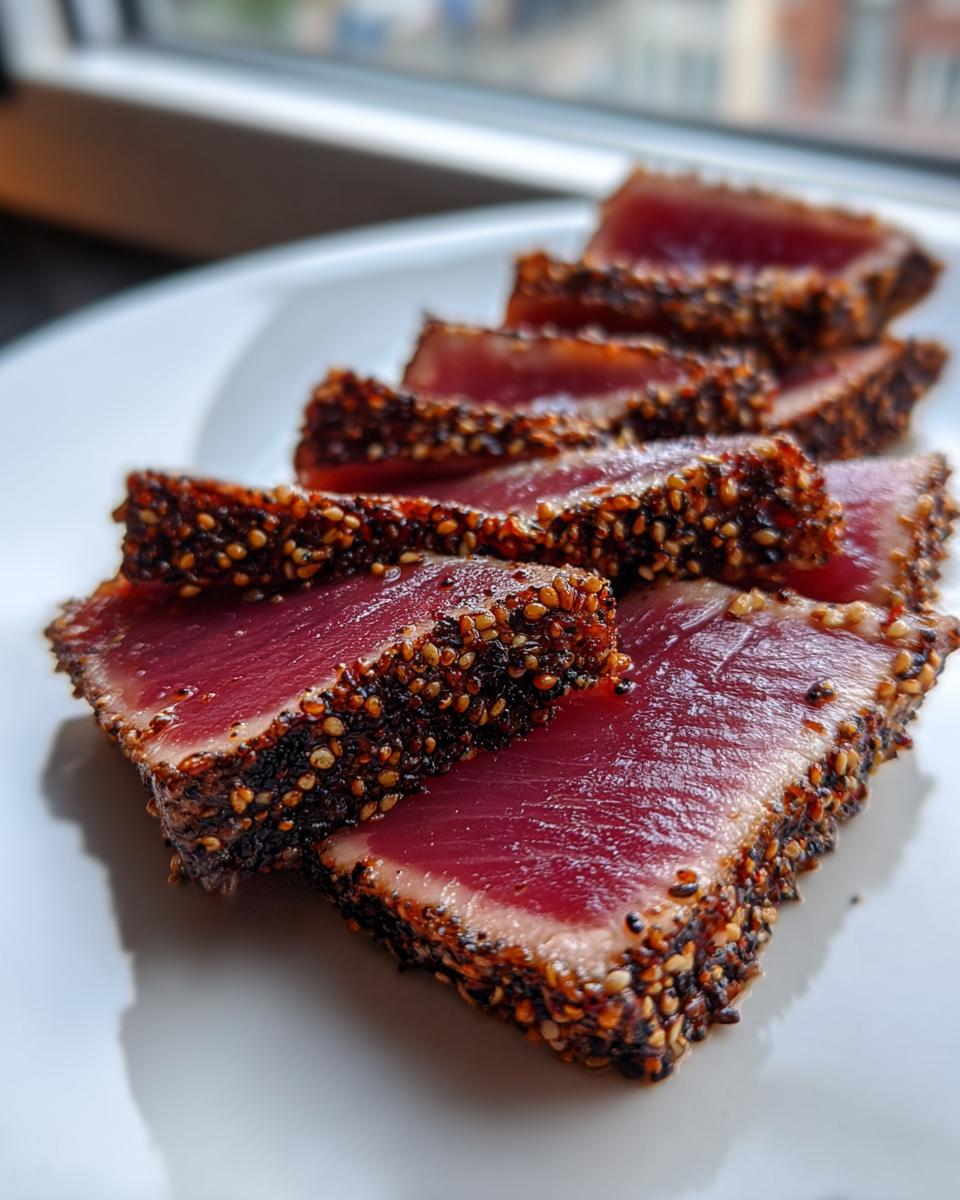
This is where we earn our stripes. Get your heaviest skillet—cast iron is always my pick—on the highest heat possible. It needs to be smoking hot. I mean truly screaming hot! You want that pan almost glowing before the tuna hits it.
Now, place the seed-crusted steaks carefully into the hot pan. You’re only going to sear for 60 to 90 seconds on the first side. That’s it! You’ll see that crust instantly form. Flip it over and hit the other side for another 60 to 90 seconds. We are aiming for rare/cool in the middle for this Asian tuna recipe. Once they come out, hit them with a tiny pinch of salt and let them rest on the board for three minutes. Don’t cut them right away; that resting time lets the juices settle. Then slice against the grain.
Tips for Success When Making Seared Ahi Tuna
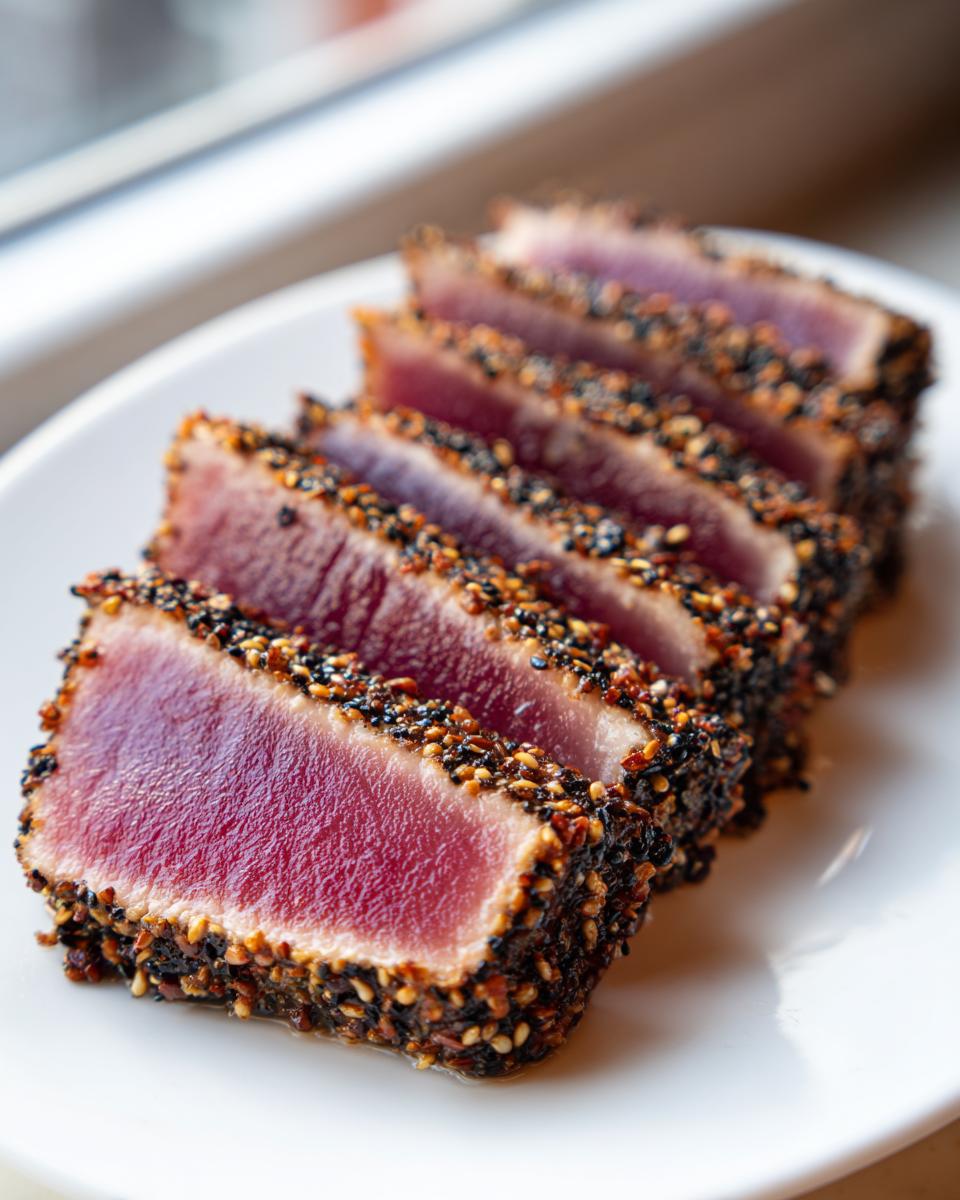
I’ve messed this up enough times that I can tell you exactly what not to do! The difference between edible tuna and that truly amazing, luxurious gourmet tuna is all in the details. These are the little habits I picked up that finally made my tuna consistently perfect every time I cook it.
My number one rule, which I listed in my recipe notes, is getting that skillet smoking hot. If you’re nervous about it, just wait until you see a tiny wisp of smoke rising. That means the pan can handle the fresh sesame oil on the tuna without soaking it up like a sponge. If your pan is even slightly cool when the fish goes in, you’re going to just cook the outside layer, resulting in grey fish instead of that warm crust we want.
Another pitfall I see people make is overcrowding the pan. These steaks are gorgeous, but they need personal space! If you put too much fish in there at once, the temperature of the skillet drops drastically. That’s instant steaming. If you’re making this for more than two people, cook in batches. It takes an extra minute, but it’s totally worth the gorgeous crust on every single piece. You don’t want to compromise that beautiful sear just to save a minute.
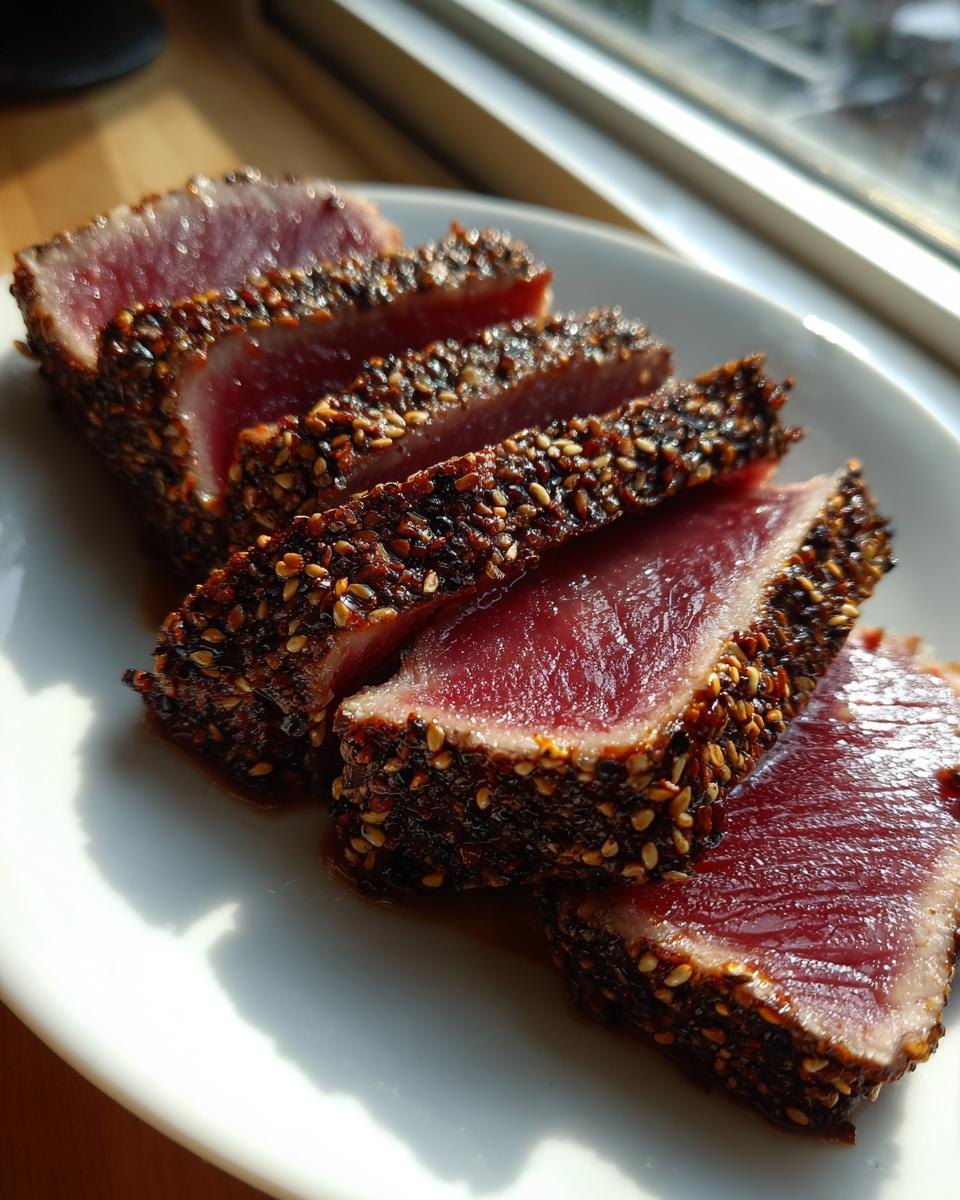
Also, remember what I mentioned about the center? If you truly want that classic rare center for your Seared Ahi Tuna, stick to that 60 to 90-second window per side. If you’re aiming for medium-rare, you can push it to two minutes per side, tops. Any more than that, and you’ve basically cooked a weeknight steak, not this delicate fish. It’s better to undercook slightly and serve it with wasabi on the side than to end up with dry, overcooked yellowfin tuna.
Variations on Your Asian Tuna Recipe
Now, while I truly think this simple sesame crust for our Seared Ahi Tuna is the gold standard, I know sometimes you just need a little shake-up! The beauty of this technique is that the sear is what matters most. You can swap out the marinade ingredients easily.
If you’re out of soy sauce, a splash of coconut aminos works beautifully for a slightly saltier, deeper flavor in this Asian tuna recipe. Or maybe you want to bring some heat? Add a tiny dash of Sriracha right into the oil mixture before brushing it on. That gives you a lovely little kick.
For the crust, forget sesame seeds just this once and try crushed nori flakes mixed with a little black pepper. It gives it a seaside, umami vibe that partners so well with the fresh, cool center of the yellowfin tuna. Just remember—the pan temperature must be scorching hot, no matter what you coat the outside with!
Serving Suggestions for Gourmet Tuna
You’ve done the hard work; you nailed that beautiful sear, and now you have this stunning, ruby-centered gourmet tuna ready to go. What do you serve with steak that cooks in three minutes? We need sides that are just as quick and healthy to match the effort! I love finding sides that complement the Asian inspiration without overpowering that delicate flavor.
First off, the dipping sauce! You absolutely must have something on the side for dipping. My default is the simple soy-wasabi combination mentioned in the notes. Just a dab of potent wasabi mixed into light soy sauce or tamari works wonders. If that’s too intense for you, try mixing a tablespoon of peanut butter with a little lime juice and water until it’s dip-able—it’s surprisingly good with the sesame crust.
For healthy sides that keep this firmly in the healthy dinner category, I rotate between two things. Steamed baby bok choy is fantastic because it only takes minutes to steam and you can just drizzle it with a touch of the leftover marinade oil. Or, if I want something cooler, a simple cucumber salad dressed with rice vinegar and a tiny pinch of sugar is incredibly refreshing against the rich fish.
When you slice the tuna against the grain, try fanning those beautiful pieces out over a small bed of quick-cooking brown rice or even some lightly dressed salad greens. It makes the final plate look restaurant-quality, even though the whole process took less than twenty minutes. Enjoy this beautiful meal!
Storage and Reheating Instructions for Seared Ahi Tuna
So, you’ve done it! You have perfectly cooked Seared Ahi Tuna, but maybe you made a little too much, or perhaps you snagged an extra piece that you want to save for lunch tomorrow. I get it. But listen, this is one dish where leftovers need special handling, especially if you value that beautiful rare center we worked so hard to achieve.
For storage, you need to get that tuna into an airtight container and straight into the coldest part of your fridge as soon as it has cooled down to room temperature. We’re talking within two hours, tops. Because this fish is barely cooked, it doesn’t hold up well sitting out to warm up. Once it’s chilled, it can usually last safely for a day, maybe two, but honestly, it’s way better the day you make it.
Now, about reheating—and this is where I need you to trust me on this one: Do not reheat it. Seriously, don’t put it in the microwave or try to sear it again. When you cook this delicate yellowfin tuna past the initial sear, that gorgeous rare center turns grey and chalky fast. It just ruins the texture we worked for!
If you’re saving it for lunch the next day, the best way to enjoy those leftovers is to eat them cold. Think of them like leftover roast beef, but fishy! You can slice up those cool, rare pieces and toss them directly onto a fresh salad, maybe drizzled with a little bit of extra fresh soy sauce or lime juice. It tastes fantastic cold, and you keep that incredible texture intact. If you try to warm it up, you’ll just end up with rubbery fish, and we can’t have that happen to our beautiful quick seafood recipe!
Frequently Asked Questions About Yellowfin Tuna
I’ve answered the main steps, but because this recipe relies on such a high-quality ingredient—yellowfin tuna—I often get questions about sourcing and technique. It’s totally normal! When you’re working with something this pristine, you want to make sure you get it right every time. Here are a few things that keep popping up in my inbox and on contact forms. If you’ve got another question after reading these, feel free to reach out to me at the diary!
Can I use frozen tuna for this Seared Ahi Tuna recipe?
This is a big one, and my answer is: maybe, but you have to be incredibly careful. Ideally, you want fresh, never-frozen fish, especially because we’re eating it nearly raw in the center. If you must use frozen, buy it from a reputable source that specifically sells “sushi-grade” flash-frozen fish. The thawing process is crucial! You need to thaw it extremely slowly overnight in the refrigerator. Never, ever thaw it on the counter or in hot water. Rushing the thaw can compromise the texture and open the door to quality issues that you just can’t sear away. For the best results with this Seared Ahi Tuna, fresh is always my preference.
What temperature should the pan be for searing?
If I could give you a magic number for the pan temperature, I would, but honestly, you have to learn to watch the pan! I keep saying “smoking hot,” and I mean it. Think about the oil on the tuna—if it doesn’t sizzle and start smoking almost immediately when it hits the metal, your pan is too cool. A cooler pan means your beautiful sesame seeds will burn, and the outside of the fish will soak up the oil instead of getting that perfect, quick crust. You need high, screaming heat for that 60-second sear. Don’t be scared of the heat; use a heavy skillet, let it pre-heat for at least five minutes empty, and *then* you’ll know when it’s ready for your Seared Ahi Tuna.
We want that crust locked in fast so the inside stays cool and rare. It’s the simplest trick that makes the biggest difference in the final texture.
How do I know if my tuna is cooked enough?
This is a matter of preference, but for an authentic experience with this Asian tuna recipe, rare is the goal. For a true rare center, you’ll stick to 60 to 90 seconds per side. When you press lightly on the side of the steak, it should feel firm on the outside but give quite a bit when you press the middle. If you want medium-rare—and this is the absolute maximum I recommend—go for two minutes per side. If you’re serving this gourmet tuna to someone who is nervous about eating it rare, start with one minute per side, slice it, check the center, and if they feel it needs more, put it back on a cooler spot on the pan for just 30 seconds more. It’s easy to overcook this fish, so err on the side of caution!
If you look up things like food safety guidelines for cooking fish, you’ll see that since this is a high-quality product, cooking the exterior while leaving the interior cool is considered safe for most people. If you have any health concerns, though, definitely cook it a little longer. You can always find more ways to connect with me if you’re worried about any recipe, too! Just send me a message.
Understanding the Nutrition in Your Quick Seafood Recipe
I always get excited when I talk about how surprisingly lean and full of protein this Seared Ahi Tuna is! It really is the perfect foundation for a healthy dinner since it’s packed with goodness and cooks so fast. Since we share all our recipes here in the Diary, I know you’re going to want the numbers, too.
However, I need to be upfront with you, just like I am with my own shopping habits. Because every single brand of soy sauce is different, and the exact fat content in yellowfin tuna can vary batch by batch, any nutritional breakdown is really just an educated guess on my part. I hate giving you something that’s not 100% accurate based on the exact can of oil you might have on your shelf!
So, here is my standard disclaimer, which is very important for tracking your meals accurately. The information below is an *estimate* based on using standard ingredients, like the exact quantities listed in the recipe. If you swap out that light soy sauce for a high-sodium teriyaki glaze, or if you use a fattier cut of tuna, those totals will change!
For the most precise tracking on your end, especially if you are watching your sodium or fat intake as part of your healthy dinner planning, I always recommend plugging the exact ingredients you use into your favorite nutrition tracker. You can read more about how we handle data and privacy here at the Diary on our privacy policy page. Now go enjoy that wonderfully quick, healthy, and delicious meal!
PrintPerfectly Seared Ahi Tuna Steaks
Learn how to quickly sear sushi grade yellowfin tuna to achieve a warm, flavorful crust and a cool, rare center. This Asian tuna recipe is a healthy dinner ready in minutes.
- Prep Time: 10 min
- Cook Time: 3 min
- Total Time: 18 min
- Yield: 2 servings 1x
- Category: Dinner
- Method: Pan Searing
- Cuisine: Asian
- Diet: Low Fat
Ingredients
- 2 (6 ounce) sushi grade ahi tuna steaks
- 2 tablespoons sesame oil
- 1 tablespoon soy sauce or tamari
- 1 teaspoon grated fresh ginger
- 1 clove garlic, minced
- 1/4 cup black and white sesame seeds, mixed
- Pinch of sea salt
Instructions
- Remove the tuna steaks from the refrigerator 15 minutes before cooking to allow them to come closer to room temperature. Pat them completely dry with paper towels.
- In a small bowl, whisk together the sesame oil, soy sauce, ginger, and minced garlic. Brush this mixture evenly over all sides of the tuna steaks.
- Place the mixed sesame seeds on a shallow plate. Gently press each side of the tuna steaks into the seeds until they are fully coated.
- Heat a heavy-bottomed skillet, such as cast iron, over high heat until it is very hot. Add a small amount of high smoke point oil if your pan is not non-stick, though the oil brushed on the tuna should suffice.
- Carefully place the coated tuna steaks in the hot skillet. Sear for 60 to 90 seconds per side for a rare center. Adjust time slightly for your preferred doneness, but avoid overcooking.
- Remove the tuna from the pan immediately. Sprinkle lightly with sea salt.
- Let the seared ahi tuna rest on a cutting board for 3 minutes before slicing against the grain into half-inch thick pieces. Serve immediately.
Notes
- For the best sear, make sure your skillet is smoking hot before the tuna touches the pan.
- If you prefer a slightly more cooked center, sear for 2 minutes per side.
- Serve this gourmet tuna with a side of wasabi or a light soy dipping sauce.
Nutrition
- Serving Size: 1 steak
- Calories: 250
- Sugar: 1
- Sodium: 350
- Fat: 12
- Saturated Fat: 2
- Unsaturated Fat: 10
- Trans Fat: 0
- Carbohydrates: 3
- Fiber: 1
- Protein: 32
- Cholesterol: 75